


CharmPass
MTA IT
Using public transport becomes much easier when the ticket is already on your phone, but shared travel adds a practical complication: the person holding the device is not always the person who needs to show the fare. I tested CharmPass with that everyday problem in mind. This is the official mobile ticketing app from MDOT MTA, developed by MTA IT, and it sits in the Travel & Local category as a free app for Everyone. My overall impression is positive, especially for people who regularly ride Maryland transit and want to avoid handling paper tickets or searching for a vending machine at the last minute.
The important distinction is that CharmPass is focused on ticketing rather than trying to become a complete travel companion for every part of a journey. That narrow purpose is a strength: when I opened it with a specific fare purchase in mind, the experience felt more direct than using a general payment wallet or relying on a physical ticket. It is also a limitation for travelers who expect one app to handle every route, every operator, navigation, and group planning task in one place.
How CharmPass works when one household shares the travel responsibility
A realistic household example is a parent buying a ticket before a child or another family member leaves for a trip. The buyer may be at home, while the passenger is already preparing to go. In that situation, the phone used for the purchase becomes part of the travel plan. I would not treat CharmPass as a family account system or assume that several people can independently manage the same ticket without checking the exact on-screen behavior first. The safer approach is to decide in advance who will carry the device and who will be responsible for presenting the ticket.
This matters because a digital ticket is not the same as a paper ticket that can simply be handed over. If one person purchases on a shared household phone, that person should remain available to open the app when needed. For a couple traveling together, the simplest workflow is usually to keep the tickets on the phone of the person who will stay with the group. For separate journeys, I would avoid casually mixing everyone’s travel purchases on one device unless the passengers have a clear handoff plan.
My most useful household tip is to decide the ticket holder before buying. That small step prevents a common source of stress: a passenger leaving with the wrong phone while the ticket remains with someone else. CharmPass is convenient when the device and traveler stay together, but convenience drops quickly when the app is being used as an informal shared wallet.
Related News

Why WhatsApp Messenger Still Makes Everyday Communication Feel Easy

Jurassic World: The Game Is the Better Dino Tycoon for Strategic Players

Threads in Real Life: Who Should Join, Lurk, or Leave

How SHEIN Turned Shopping Into an Endless Content Feed

How to Make Fortnite Feel Smarter on Mobile

Should You Switch to Microsoft Outlook on Mobile?
Starting with the right boundaries
Setup is less about configuring a household profile and more about establishing good boundaries around the phone, the account, and the passenger. I would install CharmPass on the device that will normally accompany the rider, rather than automatically putting it on the phone used for all family purchases. That choice keeps ticket access close to the person who may need it during boarding or inspection.
For a shared device, I would also make sure every intended user understands which purchase belongs to which journey. A quick verbal agreement is surprisingly useful: one person buys, another carries the phone, and nobody removes or changes the relevant ticket before the trip is complete. This is not a special CharmPass family feature; it is simply the practical discipline required whenever one screen represents travel rights for more than one person.
The app is free to download, which makes trying it straightforward. It supports devices running Android 6.0 or later, so compatibility is reasonable for many older phones as well as current ones. Still, an older phone may be less comfortable for quick ticket presentation if it takes longer to wake, load, or switch between screens. I would test the complete purchase-and-display routine before relying on an older household handset during a time-sensitive journey.
Gallery
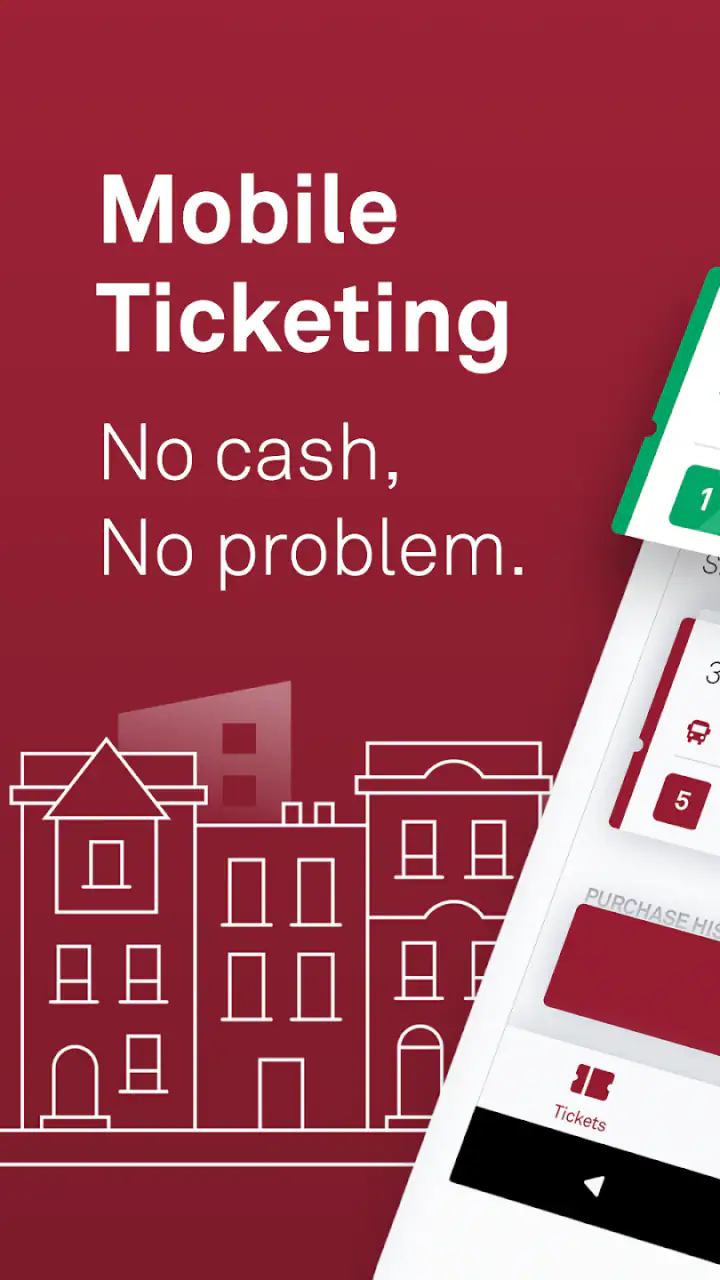
CharmPass has been available since September 26, 2018, and its current version is 3.21.7458. Those details are useful when checking whether a device is suitable, particularly in a household where one person keeps an older phone for travel. I would update the app before a planned trip rather than waiting until standing near a station or boarding point. That is basic preparation, but it is more important with digital tickets because the phone is part of the proof of purchase.
Coordinating tickets without creating confusion
CharmPass works best when the group treats ticket management as a small coordination task. Before purchasing, I would clarify who is traveling, which fare each person needs, and whether the buyer will also be present. This is especially helpful when a parent is arranging travel for a teenager, when partners are leaving at different times, or when one person is handling tickets for visitors unfamiliar with the local system.
A useful routine is to purchase with enough time to review the result, then keep the phone charged and easy to access. I would not bury the app in a folder, sign out unnecessarily, or hand the phone to another person without explaining where the active ticket can be found. These are ordinary phone habits, but they become meaningful when a traveler needs to show a ticket quickly.
For a group that remains together, one phone may be practical if the app clearly presents the purchased tickets in a way the group can manage. Even then, I would keep the arrangement simple and avoid assuming that one display automatically solves every passenger’s needs. If members split up, the shared-device method becomes much less attractive. In that case, each traveler having an appropriate ticket on the device they carry is usually easier than coordinating a remote handoff.
This is where CharmPass differs from a physical ticket. Paper is easy to pass from one person to another, while a mobile ticket is tied to the workflow of a phone. The app removes the need to carry paper, but it replaces that with responsibility for battery, access, and device ownership. I see that as a fair trade for regular riders, though occasional travelers may prefer the simplicity of buying a physical fare when available.
What I would do before leaving home
My preparation checklist for a household trip would be short:
- Choose the phone that will stay with the passenger or group.
- Install or update CharmPass before the departure day.
- Complete the purchase while there is time to correct a mistake.
- Confirm that the intended traveler knows who holds the device.
- Leave enough battery for the whole journey, not just the first boarding point.
The last point is easy to overlook. A digital ticket can be perfectly purchased and still become inconvenient if the phone shuts down. CharmPass is not responsible for a household’s charging habits, but the app makes those habits part of the travel plan. I recommend carrying a charger or power bank for long days, particularly when the same phone is also being used for maps, messages, and calls.
Age, trust, and responsible use
The Everyone age rating makes CharmPass suitable in a broad sense, but an age label does not remove the need for adult judgment. A younger passenger may be perfectly capable of carrying a phone and showing a ticket, yet still need help with purchasing, account access, battery planning, or handling an unexpected change. I would separate those responsibilities instead of assuming that the youngest traveler should manage the entire process alone.
For teenagers, CharmPass can be a useful step toward independent travel because the ticket is available on a familiar device. The boundary I would set is clear: the young passenger should know how to open the ticket, while the adult should know what was purchased and remain reachable when practical. That arrangement builds confidence without pretending that a mobile ticket is foolproof.
Trust also matters between adults sharing a phone. If a partner or relative buys a ticket for someone else, both people should understand who can access the purchase and who is expected to present it. I would not share login details casually or leave a device unlocked in a public place. These are sensible digital-safety habits, especially when a travel app is used on a phone that several household members handle.
CharmPass is not the right choice for someone who does not reliably use a smartphone, cannot keep a device charged, or feels uncomfortable managing tickets on a screen. In those cases, a physical purchasing method or direct assistance may be less stressful. The app is designed to make mobile ticketing easier, not to eliminate every accessibility or confidence barrier connected with phones.
Where the app feels stronger than the usual alternatives
The clearest advantage is focus. Instead of carrying a paper ticket or trying to organize travel payment through a general-purpose wallet, I can use an app built specifically for MDOT MTA mobile ticketing. That official connection gives CharmPass a clear role, and its free price removes an extra cost for people who want to try the digital route.
Compared with buying at the last possible moment, mobile ticketing can reduce the physical steps involved in starting a journey. I find that especially valuable when traveling with luggage, managing a child, or moving through a busy location where stopping to search for a machine is inconvenient. Preparing the ticket before leaving also gives the household a chance to settle the details while everyone is still together.
Compared with a general navigation app, CharmPass is more appropriate for the actual fare transaction. A maps app may help decide how to get somewhere, but it is not necessarily the place I want to manage an MDOT MTA ticket. Keeping those roles separate can be helpful: use navigation for directions, and use CharmPass for the ticket itself.
The trade-off is that a focused ticketing app may not replace every other travel tool. Someone who wants route discovery, broad regional planning, or a single payment method across unrelated transport services may prefer a broader solution where available. I would choose CharmPass when the journey specifically involves the MDOT MTA ticketing context, not simply because it is a travel app.
Small frictions that affect real trips
The main friction is dependency on the phone. A lost device, depleted battery, poor connectivity at the wrong moment, or confusion between household users can turn a simple purchase into a stressful situation. I do not view that as a reason to reject CharmPass, but I do view it as a reason to prepare differently from a paper-ticket journey.
Another limitation is the mental overhead of shared use. A single buyer may find the process easy, while a family coordinating several people and departure times has more to track. The app can support a household workflow, but it should not be mistaken for a dedicated family-management tool. If your main need is assigning travel access to several independent passengers, check the exact ticket-handling process carefully before making a large group purchase.
I also prefer not to experiment with a new purchase flow while already late. A first-time user should spend a quiet moment learning where the ticket appears and how to bring it back up. That is one of the non-obvious benefits of a trial run: it reveals whether the chosen phone, user, and household plan actually work together before the journey depends on them.
Who should use CharmPass, and who should choose another method?
I recommend CharmPass to regular MDOT MTA riders, occasional visitors who are comfortable with mobile payments, and households that can keep the ticket and passenger together on one reliable phone. It is particularly useful for someone who dislikes carrying paper, wants to prepare before leaving, or often needs to organize a journey while looking after other people.
I would be more cautious recommending it to travelers who split up after one person buys, families without a clear device plan, or anyone whose phone is unreliable. It may also be a poor fit for people who want one app to cover every transportation provider and every stage of a trip. In those situations, a physical ticket or a more broadly integrated travel-payment option may be simpler, depending on what is available for the specific journey.
The app’s average rating is 4.5 from around 3.6 thousand ratings, with roughly 1.4 thousand written reviews, and it has passed 100 thousand installs. Those figures suggest that CharmPass has found a substantial audience, but I would still judge it by your travel pattern rather than popularity alone. A high rating cannot solve the practical question of whether the phone will be with the right passenger when the ticket is needed.
My household verdict
After looking at CharmPass through the lens of shared travel, I see it as a sensible, focused tool rather than a complete household transportation system. Its strongest use is straightforward: one person prepares an MDOT MTA mobile ticket, the intended traveler carries the phone, and everyone understands the arrangement before leaving. When those boundaries are clear, the app can remove paper handling and make preparation feel calmer.
My recommendation is to use it with a simple rule: the person who needs to show the ticket should normally control the phone that holds it. That rule covers most of the household confusion I would worry about. For a group that stays together, one carefully managed device may be convenient; for people traveling separately, individual arrangements are safer and easier to explain.
CharmPass is free, rated for Everyone, and compatible with Android 6.0 and later, so the entry barrier is modest. I would install it ahead of time, complete a practice check, and make battery planning part of the trip. With that preparation, CharmPass earns my recommendation for MDOT MTA riders who want official mobile ticketing and are comfortable making the phone part of their travel routine. It is less suitable when device sharing is chaotic, phone access is uncertain, or a paper-based alternative would give the household more confidence.
FAQs for CharmPass
What is CharmPass and what can I use it for?
CharmPass is a mobile ticketing app designed for public transportation in the Baltimore area. After installing it, users can browse available fares, purchase tickets or passes, and display them on their phone when boarding or during inspection. It is especially useful for riders who want to avoid ticket machines, carry less cash, and manage transit purchases directly from an Android or iOS device.
Which transportation services and tickets are available in CharmPass?
The app focuses on participating Maryland transit services, including options associated with the Maryland Transit Administration, such as buses, light rail, Metro Subway, and other eligible services or fare products. Availability can depend on the selected route, agency, and current fare rules. Before purchasing, check the ticket description carefully to confirm that it covers your intended service and travel area.
How do I activate and use a ticket purchased in CharmPass?
Buying a ticket does not always mean it is immediately active. In most cases, you select the ticket from the app and activate it before boarding or entering the system, depending on the product rules. Once activated, the ticket normally displays a time period, countdown, or visual validation screen. Keep your phone charged and show the active ticket when requested by transit staff.
Can I use CharmPass without an internet connection?
CharmPass generally requires an internet connection for downloading the app, signing in, purchasing fares, and synchronizing account information. However, a previously purchased and activated ticket may remain available for inspection if the connection becomes unreliable, depending on the ticket type and app behavior. It is best to open the ticket before reaching the station and avoid relying on weak mobile coverage.
Are CharmPass purchases refundable or transferable to another person?
Refund, cancellation, and transfer rules depend on the fare product and the transportation agency’s policies. Unused tickets may not automatically qualify for a refund, while activated tickets are commonly treated as used and may be nonrefundable. Tickets can also be linked to the purchasing account or device, so do not assume they can be freely shared. Review the terms shown before confirming payment.
Pros
- Buy and manage transit tickets directly from your phone.
- Useful for checking fares and available travel products in one place.
- Digital tickets reduce the need to carry paper passes.
- Can save time at stations by purchasing before reaching the platform.
- Ticket details remain accessible in the app for easier trip planning.
Cons
- Requires a compatible smartphone with sufficient battery during travel.
- Some features may depend on internet access or mobile data.
- Ticket activation rules can vary and may confuse first-time users.
- Not all transport services or regions may be supported.
- A phone problem can make accessing your purchased ticket difficult.


